Eiyuden Chronicle Tier List: Best Hundred Heroes Characters Ranked
Trying to make an Eiyuden Chronicle tier list is a little dangerous because Hundred Heroes gives you so many characters that almost everyone ends up with a favorite who looks way better in their own save file than on somebody else's spreadsheet. I get it. I kept several characters around far longer than I probably should have simply because I liked using them, and the game's catch-up EXP system makes experimenting surprisingly painless.
Still, there are definitely characters who make combat easier. Momo hits like someone accidentally added an extra digit to his Magic stat. Isha is fast, flexible, and excellent from the back row. Lam turns into a ridiculous physical attacker once you recruit her. Reyna can make the front row feel almost indestructible. Then there are units such as Iugo and Yusuke who are available early enough that investing in them never feels wasted.
The thing I care about most in this ranking is not just damage. Rune slots matter a lot. Range matters. Recruitment timing matters. A character who joins early and carries you through twenty hours of story has real value even if a late-game recruit eventually outscales them. So this list looks at the whole game rather than only level-99 damage tests.
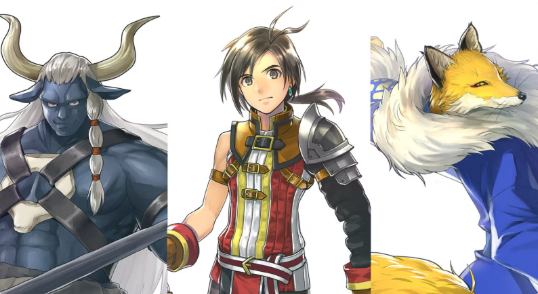
I. Eiyuden Chronicle Tier List: Best Hundred Heroes Characters Ranked
Here is the quick version of my overall combat ranking.
| Tier | Characters |
|---|---|
| S Tier | Momo, Isha, Lam, Leene, Iugo, Reyna |
| A Tier | Nowa, Yusuke, Seign, Marisa, Yuferius VII, Wayve, Hakugin, Milana, Markus, Dijkstra |
| B Tier | Garr, Lian, Mio, Francesca, Falward, CJ, Nil, Mellore, Kogen, Sabine, Valentin, Hildi |
| Situational | Gieran, Marin, Yume, Faye, Leon, Jorhan, Dr. Corque and other matchup- or build-dependent characters |
I would not take the lower tiers as “do not use.” Eiyuden Chronicle is generous enough with levels that you can bring an underused recruit up to speed quickly, and some characters become dramatically better once a specific rune or accessory is available. S tier simply means I rarely need to invent a reason to put that character in the party.
II. Overall Combat Character Rankings
A. S Tier: Strongest Party Members
Momo is the easiest S-tier placement for me. Once he joins, the question is not really whether he is a good mage; it is how ridiculous you want to make him. His Magic is exceptional, he has a huge amount of Rune-Lens flexibility, and he can be built around high-level spells without feeling like the rest of his kit is fighting against you. He also holds up well enough defensively that I do not feel like I am escorting a glass statue through every boss battle.
Isha is the mage I tend to use when I want speed and consistency. She joins earlier than Momo, sits safely in the back row, and does excellent magic damage without needing a strange setup. I like her because she starts contributing immediately. There is no long “trust me, she gets good later” phase.
Lam is one of the funniest physical attackers in the game because her tiny character model does not prepare you for how hard she can hit. Her long-range weapon also means she does not have to fight for a front-row slot, which is a huge advantage when you already want Iugo, Reyna, or another tanky melee character up there.
Iugo has been good for me from the moment he joins in Eltisweiss. His Rune-Lens is not as flashy as Momo's or Nowa's, but his actual combat stats are excellent. He has strong physical damage, very good durability, and almost never feels like the wrong person to bring into an unknown dungeon.
Reyna is less about deleting enemies and more about making the rest of your party noticeably harder to kill. Her ability to protect allies in her row is exactly the sort of defensive utility that looks boring on paper and feels amazing when a boss starts throwing heavy physical attacks around.
Leene is the late-game reward character. You work much harder to recruit her than almost anyone else, but she can justify it. Her build flexibility and ability to hit entire enemy formations make her one of those characters I immediately want to experiment with once she finally joins.
B. A Tier: Reliable, Versatile Picks
Nowa is a very safe investment. His stats are solid, his Rune-Lens gives you plenty of room to customize him, and he is present for basically the entire game. He may not beat Lam in pure physical damage or Momo in magic, but he is rarely bad.
Yusuke is one of my favorite early recruits because Charge Up lets him produce absurd burst far earlier than you would expect. Charging twice and then unloading a strong attack into a boss is incredibly satisfying. He falls slightly below S tier for me because the setup takes turns and his Rune-Lens is less flexible late in the game.
Seign is another strong all-rounder. He never felt like the absolute best specialist in my party, but he can handle physical damage, magic, and utility well enough that building around him is easy.
Marisa has more Rune-Lens flexibility than many players initially realize, and her mix of physical and magical options gives her room to adapt. She is especially fun once you stop trying to force her into one narrow role.
Yuferius VII belongs here almost entirely because Charge Up remains ridiculous. Like Yusuke, he can spend time preparing and then hit a boss for the sort of number that makes the setup feel completely justified.
Hakugin is another physical attacker I like when speed matters. She can fit naturally into aggressive parties without needing complicated support.
Milana and Markus give you more strong magic options later in the game. Neither quite replaces Momo for me, but both can become dangerous with the right runes.
C. B Tier and Below: Situational Choices
B-tier characters are where team preference starts taking over.
Garr is sturdy and dependable, especially early, but eventually you start finding frontliners who either survive better or contribute more damage.
Lian feels great early because she is fast and accessible, but her limited Rune-Lens makes her harder to scale into the same late-game monster as Lam.
Mio has some interesting endgame potential, and her speed is useful, but she can feel underwhelming for a long stretch before her better tools arrive.
Francesca is a lifesaver early on. I used her a lot because having an actual healer when your roster is still small feels fantastic. Her problem is that her durability becomes increasingly uncomfortable later.
That is generally what B tier means here: perfectly usable, sometimes excellent, but eventually I start asking whether another recruit does the same job with fewer problems.
III. How the Tier List Is Ranked
A. Stats, Skills, Rune Slots, and Equipment Options
Rune slots are probably the biggest reason two characters with similar stats can end up far apart on an Eiyuden Chronicle tier list.
A character with four restrictive slots has fewer ways to adapt than someone with six or seven flexible ones. Once Epic-level runes start entering the picture, that difference becomes enormous.
Momo is the obvious example. His Magic is already ridiculous, and then the game gives him enough Rune-Lens freedom to push it even further.
Nowa also benefits heavily from having many rune slots. You can adjust him instead of being forced into one preset build.
Equipment matters for the same reason. Heavy armor and shields can change how comfortable a frontliner feels. Long-range weapons let physical characters attack safely from the rear row. I do not rank characters purely by the number beside PWR or MGC.
B. Recruitment Timing, Investment Costs, and Party Synergy
I give early characters extra credit.
Iugo joining near the beginning means every Baqua you spend upgrading his weapon pays you back for most of the game.
Yusuke is similar. You can recruit him very early and immediately start abusing Charge Up.
Compare that with Leene. She may ultimately be stronger, but she joins so late that she cannot help you through 90% of the story.
That does not make Leene worse in an endgame ranking. It just means Iugo is a much better playthrough investment.
Synergy matters too. A six-character party is not six independent damage dealers. Someone needs to heal. Someone has to survive the front row. Somebody should bring magic damage when physical defense gets annoying.
C. Combat Characters vs. Dedicated Support Characters
I keep dedicated support characters separate because they do not compete for the same six battle slots.
That distinction is important.
Yulin can be one of the most valuable characters in your entire roster while never throwing a punch.
Aire can save you an absurd amount of real-world time simply by making exploration faster.
Perrielle can improve combat through her support effect without occupying one of the front- or back-row positions.
Ranking them beside Momo or Iugo would not really make sense, so they get their own section later.
IV. Best Characters for Each Stage of the Game
A. Early-Game Recruits Worth Leveling
The first optional character I would go out of my way to recruit is Iugo.
He is sitting in Eltisweiss ridiculously early for somebody who remains useful for the entire game. Strong attack, good durability, straightforward build. There is very little downside.
Yusuke is another one I would grab as soon as possible. He is at Fort Xialuke and does not ask you to complete some twenty-step minigame. Talk to him, recruit him, start charging attacks.
Francesca is absolutely worth recruiting early even though I eventually replace her. Early healing is valuable enough that I do not care whether she is still top tier fifty hours later.
The story characters Nowa, Garr, Lian, and Mio are also worth maintaining initially. I would not spread money across every recruit you meet. Weapon upgrades get expensive, so keeping a focused core is much easier.
B. Mid-Game Upgrades and Party Replacements
This is where Isha becomes one of my priority recruits.
Once she appears in Eltisweiss, her quest takes a little running around, but the payoff is absolutely worth it. She can replace a weaker early mage immediately.
Lam is another character I would actively chase once Riufan is available. If you have been using Lian or another physical attacker mostly because they were convenient, Lam can feel like somebody suddenly upgraded that party slot by two generations.
Reyna is worth attempting as soon as your damage is high enough. Do not feel bad if you meet her and fail the recruitment test at first. The game is basically telling you to come back stronger.
C. Late-Game and Endgame Standouts
Once Momo becomes recruitable, I would stop whatever optional wandering I was doing and go get him.
He is that good.
Leene is the extreme late-game case. She requires the roster completion effort, so she is more of a reward than a normal progression character.
This is also when units such as Markus, Milana, Wayve, Nil, and other late recruits become worth experimenting with because catch-up experience lets them reach your party level very quickly.
V. Best Physical Attackers and Frontline Characters
A. Iugo, Lam, Yusuke, and Other Damage Dealers
If I want consistent physical damage, I take Iugo.
If I want absurd physical damage from the back row, I take Lam.
If I want to spend two turns winding up a punch that makes a boss regret existing, I take Yusuke.
That is basically how I separate the three.
Iugo is the most reliable. He does not need a special rotation. He just hits hard and survives.
Lam has the better offensive ceiling for me and gets the enormous advantage of long range.
Yusuke has the funniest burst. Charge Up twice, then let him go.
Nowa, Yuferius VII, Hakugin, Wayve, and several others can also fill physical roles well, but those three are the characters I keep coming back to.
B. Tanks, Survivability, and Front-Row Placement
Reyna is my favorite pure tank.
Her Cover Row & Counter defense action is exactly what I want from a front-row protector. She can absorb pressure that would make a squishier attacker fold immediately.
Iugo is not a dedicated tank, but he is durable enough that I am comfortable leaving him up front.
Garr is also solid for much of the story. His problem is not that he becomes bad; the roster simply gets more competitive.
I usually avoid filling all three front-row slots with fragile damage dealers. Boss fights get much less stressful when at least one person can take a hit without forcing the healer into emergency mode every round.
VI. Best Mages, Healers, and Backline Characters
A. Momo, Isha, and Other Magic Users
Momo is the best pure mage in the game for me.
There is not much suspense here.
His Magic stat is excellent, his Rune-Lens is ridiculous, and he can equip enough high-level magic to handle whatever element or utility you need.
Isha is the character I would place immediately below him. She is fast, long-range, and strong enough that I often use both Isha and Momo rather than treating them as direct competitors.
Milana and Markus can also become strong spellcasters, especially with good Rune-Lens setups.
Early in the game, Mellore and Francesca can fill some of this space, but I would not pour all my best runes into them once the stronger late-game casters arrive.
B. Healing, Utility, and Back-Row Placement
Healing in Hundred Heroes is a little strange because the best “healer” is often just whichever strong magic character you give a good Water rune.
That is one reason I value flexible Rune-Lenses so much.
Isha can handle healing duty without becoming useless offensively.
Momo can do the same, although I usually hate wasting his turns on basic healing unless the situation demands it.
Early on, Francesca is extremely convenient because she naturally fits the healer job.
Falward is also worth using when you want a safer, support-focused option.
As a general rule, put long- and medium-range characters in the back whenever possible. Free front-row space is valuable, and there is no reason to let a fragile mage get punched just because the formation screen allowed it.
VII. Main Character Rankings and Builds
A. Nowa, Seign, and Marisa
Of the three central heroes, I rank Nowa highest overall.
Part of that is availability, but his Rune-Lens is genuinely excellent. He has enough flexible slots that you can push him toward physical damage, utility, or a hybrid setup depending on what the party needs.
Seign is probably the most balanced of the three. He can contribute in several ways without ever making me think, “This build clearly does not fit him.”
Marisa becomes more interesting as her Rune-Lens opens up. She has physical and magical options and enough flexible slots to build around different needs.
For pure optimization, I would usually make Nowa physical, keep Seign flexible, and use Marisa as a hybrid or magic-oriented attacker depending on the rest of the party.
B. Garr, Lian, and Mio
Garr is the straightforward frontliner. He is useful from the opening hours and does not need much explanation.
Lian is fast and fun early, and her long-range attacks give her formation flexibility. Her biggest weakness is simply that her Rune-Lens ceiling is not amazing compared with the best endgame characters.
Mio is the odd one. She can feel weak for quite a while, which makes it tempting to bench her permanently. Later levels and better skills improve her considerably.
Would I keep all three in an optimized endgame party? No.
Would I regret using them during the story? Also no.
VIII. Best Party Compositions
A. Balanced Teams for Story Progression
A comfortable mid-game team for me would look something like:
Front Row: Iugo, Nowa, Reyna
Back Row: Lam, Isha, healer/flex
That party gives you physical damage, magic damage, a real tank, long-range pressure, and enough Rune-Lens flexibility to cover healing.
Before Reyna and Lam arrive, Garr, Yusuke, Francesca, or Lian can fill those slots perfectly well.
I would rather run a balanced party with slightly weaker individual characters than six damage dealers who all need healing after every enemy action.
B. Boss-Focused Teams and Endgame Setups
For bosses, one of my favorite theoretical endgame cores is:
Front Row: Iugo, Reyna, Nowa/Yusuke
Back Row: Lam, Momo, Isha
That lineup is nasty because the front is durable while the back row can output ridiculous physical and magical damage.
If the boss allows setup time, Yusuke can replace one of the steady attackers and charge for huge burst.
If I need more utility, I can replace a physical slot with Seign, Marisa, or another flexible Rune-Lens user.
C. Front-Row and Back-Row Synergies
Range is one of the easiest mechanics to overlook.
Short-range characters generally belong in front.
Long-range characters are fantastic in back because they lose basically nothing by staying safe.
Medium-range characters give you more flexibility depending on the exact formation.
Lam being long range is one of the reasons I rank her so highly. She gives you top-tier physical damage without consuming one of the valuable frontline positions.
IX. Dedicated Support Character Tier List
A. Best Support Choices for Combat
For pure combat support, my list looks roughly like this:
S Tier: Perrielle, Code L, Douglas
A Tier: Stadler, Rohan, Cabana
Situational: Various resource and utility supports
Perrielle can give the party an offensive boost, which is useful in almost every serious fight.
Code L can give everyone extra SP when his support effect triggers. It is random, but when it happens at the right time, several expensive skills suddenly become available much earlier.
Douglas can increase both physical and magical attack, which means almost any offensive party can benefit.
Stadler is more specialized, but manually changing how the party acts can create some interesting setups.
B. Best Support Choices for Exploration and Leveling
Yulin is the leveling queen.
Her support skill doubles battle EXP. If you recruit somebody late and they are twenty or thirty levels behind the party, Yulin makes catching them up almost comically fast.
Aire is the character I use when I am just moving around.
She doubles movement speed.
That does not sound as exciting as a combat buff until you spend hours running through towns, dungeons, and old areas looking for recruits. Then Aire becomes one of the hardest characters to remove from the support slot.
For material gathering, dedicated resource supports can also save time, but Yulin and Aire are the two I notice most during a normal playthrough.
X. Best Runes, Equipment, and Character Builds
A. Rune Slot Priorities and Physical Damage Builds
For physical attackers, I prioritize PWR, crit-related bonuses, attack multipliers, and strong physical skill runes.
Lam should be built to make her already high physical damage even more ridiculous.
Iugo benefits from attack boosts but can also take durability because his job often involves standing in front.
Yusuke wants anything that makes the payoff after Charge Up bigger.
The important thing is not just how many rune slots a character has. Look at their types and rarity limits.
A flexible Epic slot is much more exciting than a low-rarity slot locked to something you barely use.
B. Magic, Healing, and Utility Builds
Momo is easy: increase Magic until the numbers get silly.
Give him high-level magic runes and enough utility to cover whichever elements the current area favors.
Isha works similarly, although I am more willing to give her healing responsibilities because she is fast and flexible.
For dedicated healing, Water-based magic remains extremely useful. I like putting healing on someone who can still contribute damage between emergency turns rather than dedicating an entire slot to standing around waiting for somebody to get hurt.
C. Equipment and Accessories for Different Roles
Frontliners want defense, HP, and whatever keeps them from becoming the healer's full-time job.
Physical attackers want Power.
Mages obviously love Magic.
Speed is more valuable than it first appears because acting before an enemy can be the difference between healing a damaged character and reviving a dead one.
Accessories should solve problems.
If a character keeps dying, stop giving them another tiny damage bonus and fix their defenses.
If a slow healer always acts after the boss, give them speed.
The best accessory is not automatically the one with the biggest offensive number.
XI. Recruitment Priorities and Missable Characters
A. Which Characters to Recruit First
My early priority list is:
Iugo → Yusuke → Francesca → useful HQ recruits → Lam → Isha → Reyna → Momo
You do not have to follow that exact sequence, but I would definitely pick up Iugo and Yusuke early.
Lam and Isha are worth actively going out of your way for once their quests become available.
Momo is late enough that you cannot rush him from the beginning, but the moment the story opens his recruitment, I would get him.
B. How to Recruit Momo, Isha, Lam, and Reyna
Momo: Find him in Hishahn later in the story, agree to help him, then follow his quest into the Seaside Cavern and defeat the Kraken. Once that is done, the game's best mage is yours.
Isha: Meet her by the southeastern fountain in Eltisweiss. She gives you a sequence of errands: find the black cat in town, obtain a Cockatrice Egg through the treasure-chest battle gimmick on Mountain Path Homeward, and deliver her package to Arenside. Finish the errands and she joins.
Lam: Recruit Riufan first. Speak to him at your Headquarters inn, bring him to Daphan Village, and follow the scenes involving Lam. It is an easy recruitment quest to miss if you never put Riufan in the party.
Reyna: Find her at the harbor in Dabavin. She challenges you to prove your strength by dealing roughly 1,600 damage within three turns. She does not fight back, so build the party entirely around burst damage. If you fail early, come back later with stronger weapons and better runes.
C. Leene Recruitment Requirements and Missable Recruits
Leene is the character you really need to plan around.
To recruit her, you need all 119 other heroes before the relevant late-game victory speech. If you pass that story point without meeting the requirement, you lose the chance on that run.
That means players aiming for every hero—or the associated best-outcome path—should not leave recruitment until after finishing the story.
My advice is simple: once you reach the late game, stop occasionally recruiting characters and start using a checklist.
There are 100-plus people here. Your memory is not going to win this fight.
XII. Character Comparisons and Investment Decisions
A. Iugo vs. Yusuke
If I only have resources for one, I pick Iugo.
Yusuke can produce bigger burst with Charge Up, but Iugo is more consistent. He attacks every round, survives better, and does not ask you to spend two actions preparing his best hit.
Yusuke wins if I am specifically building around boss burst.
Iugo wins if I want somebody who is good basically all the time.
That is why Iugo sits higher overall even though Yusuke can create some funnier damage numbers.
B. Momo vs. Isha
Momo wins raw magic.
His late-game ceiling is just higher.
Isha wins availability and speed.
You can recruit her earlier, she immediately becomes one of your best casters, and she stays useful even after Momo joins.
The real answer, though?
Use both.
There is no rule saying your back row can only contain one absurd mage.
Momo + Isha + Lam is one of the strongest back-row cores you can build.
C. Francesca vs. Falward
For the early game, I prefer Francesca.
She joins early, healing is desperately useful when your options are limited, and she can carry a lot of rough early encounters.
As the game goes on, Falward becomes easier to use as a safer support-oriented character, while Francesca's durability becomes more noticeable.
Their Hero Combo is also useful if you genuinely want both in the same party, but most of the time I eventually replace both with stronger flexible casters who can heal while also doing serious damage.
XIII. Eiyuden Chronicle Tier List FAQ
A. Who Is the Strongest Character in Hundred Heroes?
For pure combat strength, Momo gets my vote.
His Magic stat, Rune-Lens flexibility, and ability to throw high-level spells around make him absurd once properly built.
If you want physical damage instead, Lam is one of the strongest choices.
If you want defense, Reyna.
If you want a character who is excellent from almost the beginning of the game, Iugo.
That is why “best” depends a little on what role you are asking about.
B. Which Characters Should You Level First?
Early on, I would prioritize:
Nowa, Iugo, Yusuke, Francesca, Garr, and whichever story characters you are enjoying.
Later, shift investment toward:
Lam, Isha, Reyna, Momo, and other high-end recruits.
Do not worry too much about characters arriving underleveled. Eiyuden's EXP scaling lets lower-level party members catch up very quickly, especially once Yulin is available.
C. How Much Do Rune Slots Affect Character Rankings?
A lot.
Probably more than most new players expect.
Stats determine what a character starts with.
Rune slots determine how far you can push them.
Characters with many flexible, high-rarity slots can equip stronger passive bonuses, better magic, and more useful skills.
That is one of the biggest reasons Momo and Nowa scale so well.
It is also why some characters who look perfectly fine at level 20 start falling behind later.
D. Can Lower-Tier Characters Remain Useful in the Endgame?
Absolutely.
Hundred Heroes is not difficult enough that you need six S-tier characters to finish it.
Weapon levels, good runes, proper equipment, and a balanced formation can make a huge difference.
Some lower-tier characters also have specific Hero Combos or niches that make them worth bringing.
If your favorite character is sitting in B tier, use them.
I would rather build a party around someone I actually enjoy than spend fifty hours staring at six characters I picked because a tier list told me to.
Finally, Let’s Wrap Things Up
The biggest thing I learned while putting together this Eiyuden Chronicle tier list is that Hundred Heroes really does reward you for trying people out.
Momo is ridiculous. Lam hits absurdly hard. Isha is one of the easiest mages to recommend. Iugo somehow manages to be available near the start and remain excellent near the end. Reyna makes the front row much safer, and Leene is a great reward for players willing to go through the effort of collecting nearly the entire cast.
But the game is not really designed around finding six perfect characters and ignoring the other hundred.
Recruit people.
Throw them into a few battles.
See what their Rune-Lens looks like.
Move long-range attackers into the back.
Give weird characters a proper build before deciding they are bad.
And when somebody new joins thirty levels below your party, do not panic. Catch-up EXP—and eventually Yulin—can fix that faster than you might expect.
That experimentation is a big part of the fun.
The tier list can tell you who makes the game easier.
It cannot tell you which six weirdos are going to become your party.